WHAT WE DO
Weekly Pool Maintenance in Austin, TX, Done Right, Every Time
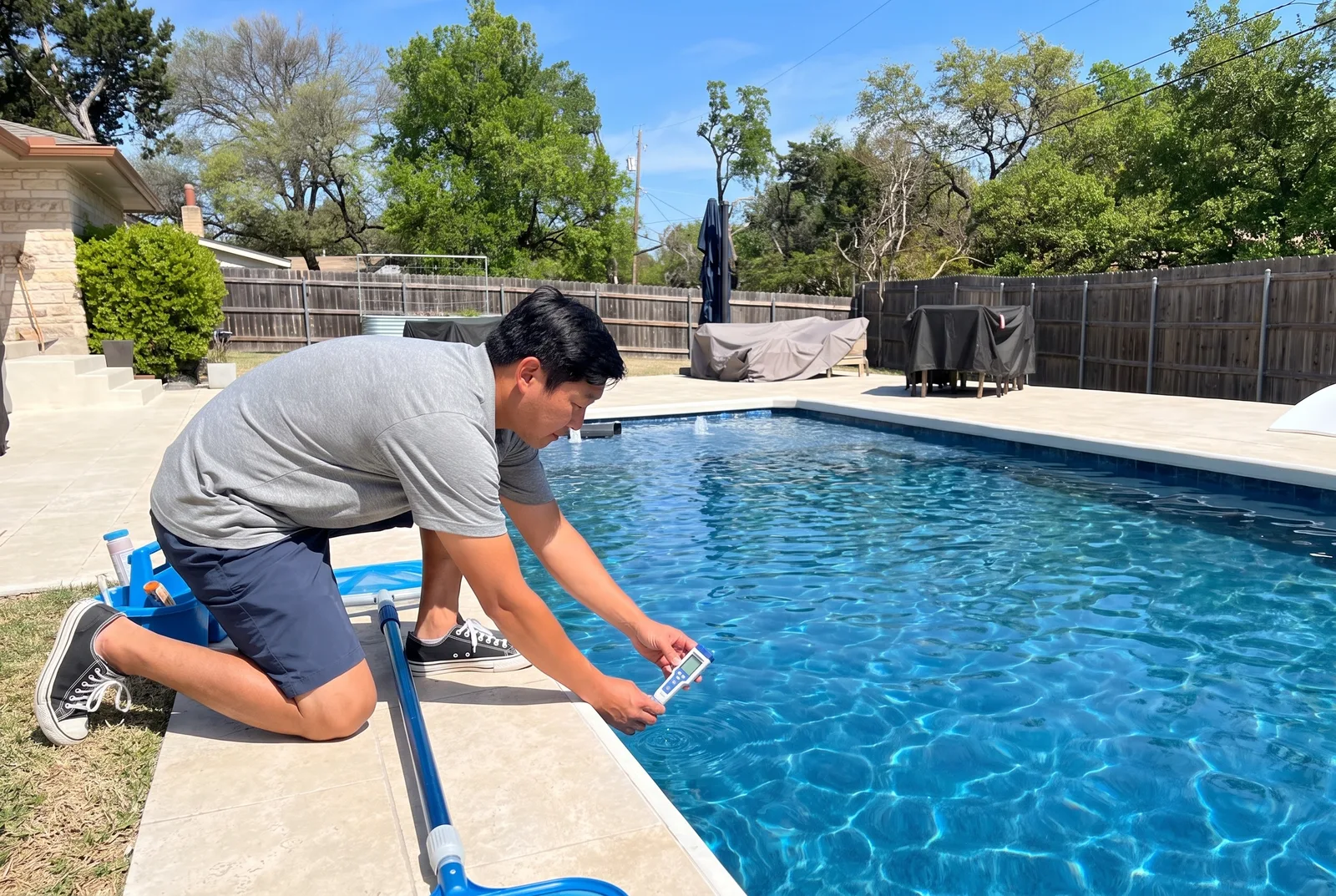
Weekly cleaning, chemical balancing, and equipment checks. Consistent service, no surprises.
Why It Matters
Your Pool Should Be Ready Every Time You Step Outside
A neglected pool gets expensive fast. Chemicals left out of balance wear down equipment, and algae takes hold quickly once Austin heat sets in. What starts as a small fix turns into a bigger repair if nobody is checking the water on a schedule.
Max Pools Austin keeps a small, boutique client roster on purpose. That means the same person shows up account to account, not a rotating crew that barely checks the water and moves on.
Every Visit
What Every Visit Includes
- Water testing and balancing: pH, chlorine, alkalinity, calcium hardness
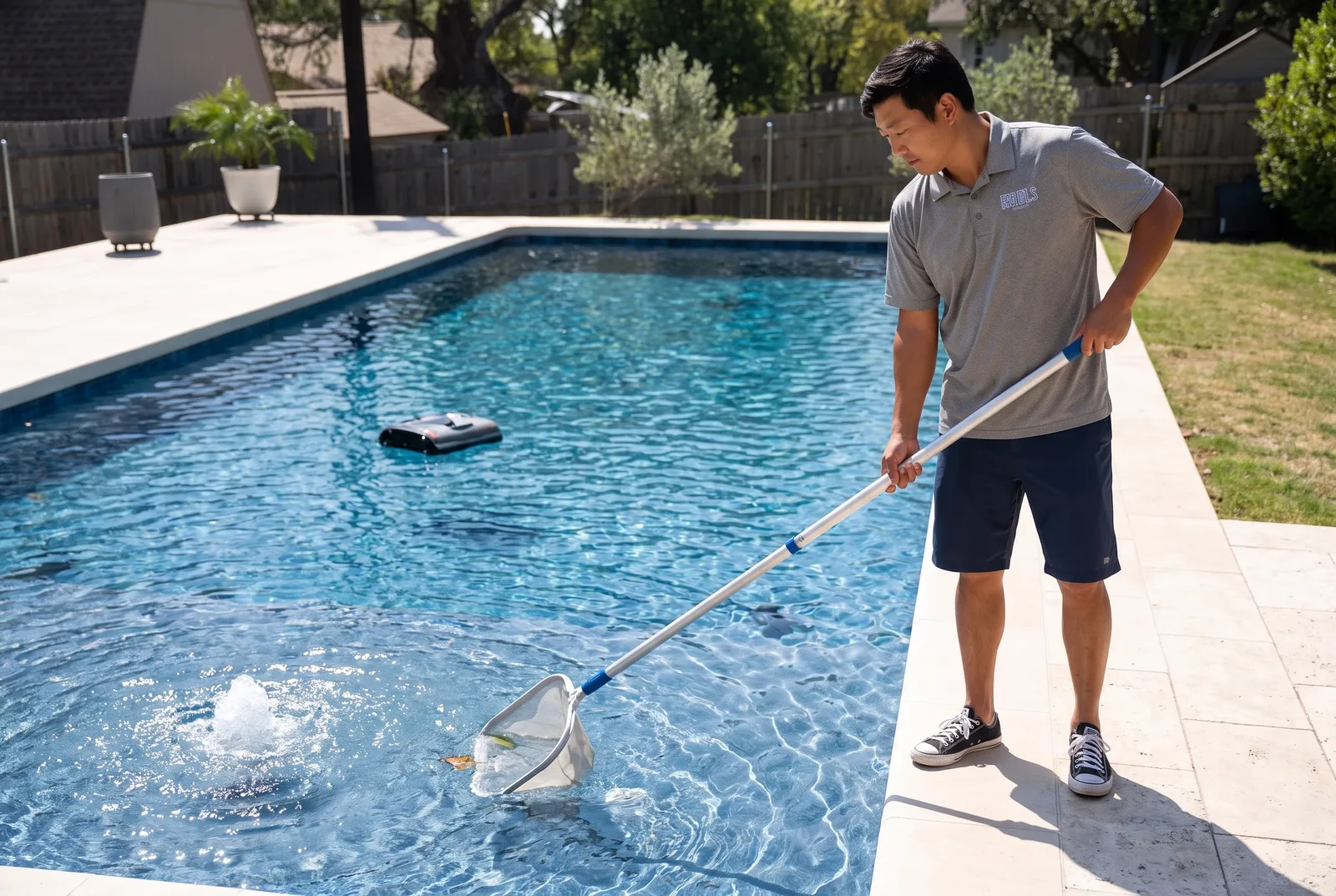
- Skimming and brushing walls and floor
- Vacuuming as needed
- Cleaning skimmer and pump baskets
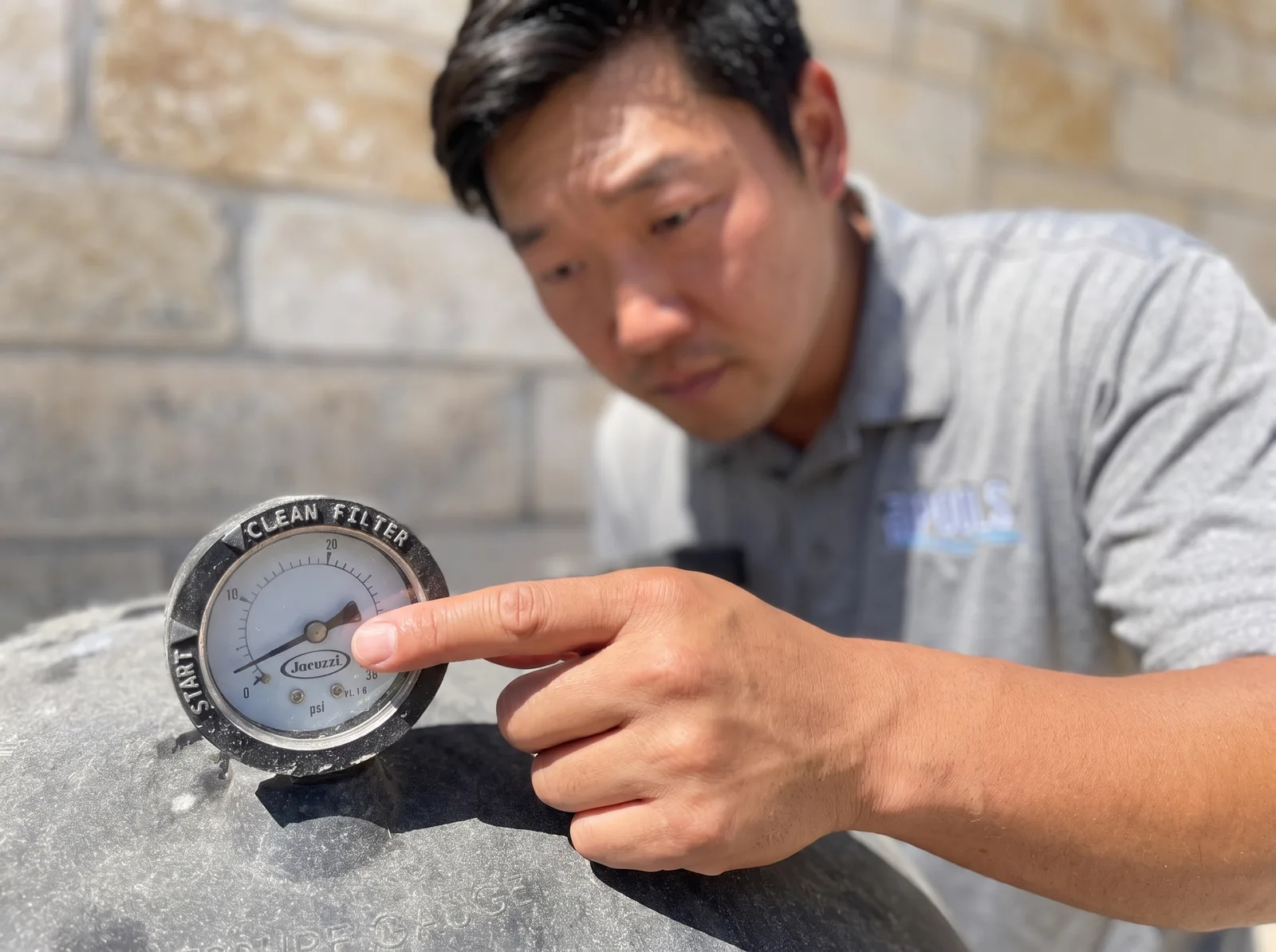
- Equipment inspection on every visit
- Direct communication the same day if anything looks off
PRICING
Straightforward Pricing
No guessing on price. Every job gets an honest number before work starts.
Maintenance, repair, and construction pricing is set after a quick look at your pool, never guessed over the phone.
Why Choose Us
Why Austin Homeowners Choose Max Pools
Owner-Led, Every Account
Max personally oversees every maintenance account and every service route.
Consistent Crew
The same person services your pool visit to visit, not a rotating cast of strangers.
Manufacturer-Certified
Certified on Fluidra, Hayward, Jandy, Waterway, and Zodiac equipment.
Direct Communication
If something looks off, you hear about it the same day, not buried on the next invoice.
HOW IT WORKS
A Straight Path From Call to Clean Pool
No pressure, no sales pitch. Just a clear process from first call to finished work.
Step 1
Call or Text
Reach out and tell us what you need, maintenance, a repair, or something bigger. No pressure, no sales pitch.
Step 2
Free On-Site Inspection
Max comes out, looks at your pool, and gives you a straight answer. If it is a quick fix, he tells you. If it needs more, you get an honest estimate.
Step 3
Clear Plan
You get a straight answer on scope, timeline, and price before any work starts.
Free InspectionBefore any quote
Step 4
Service Starts
Once you are in, you are in. Consistent weekly service, clear communication, and a pool you actually want to swim in.
What Austin Homeowners Say
Eric Gehrman

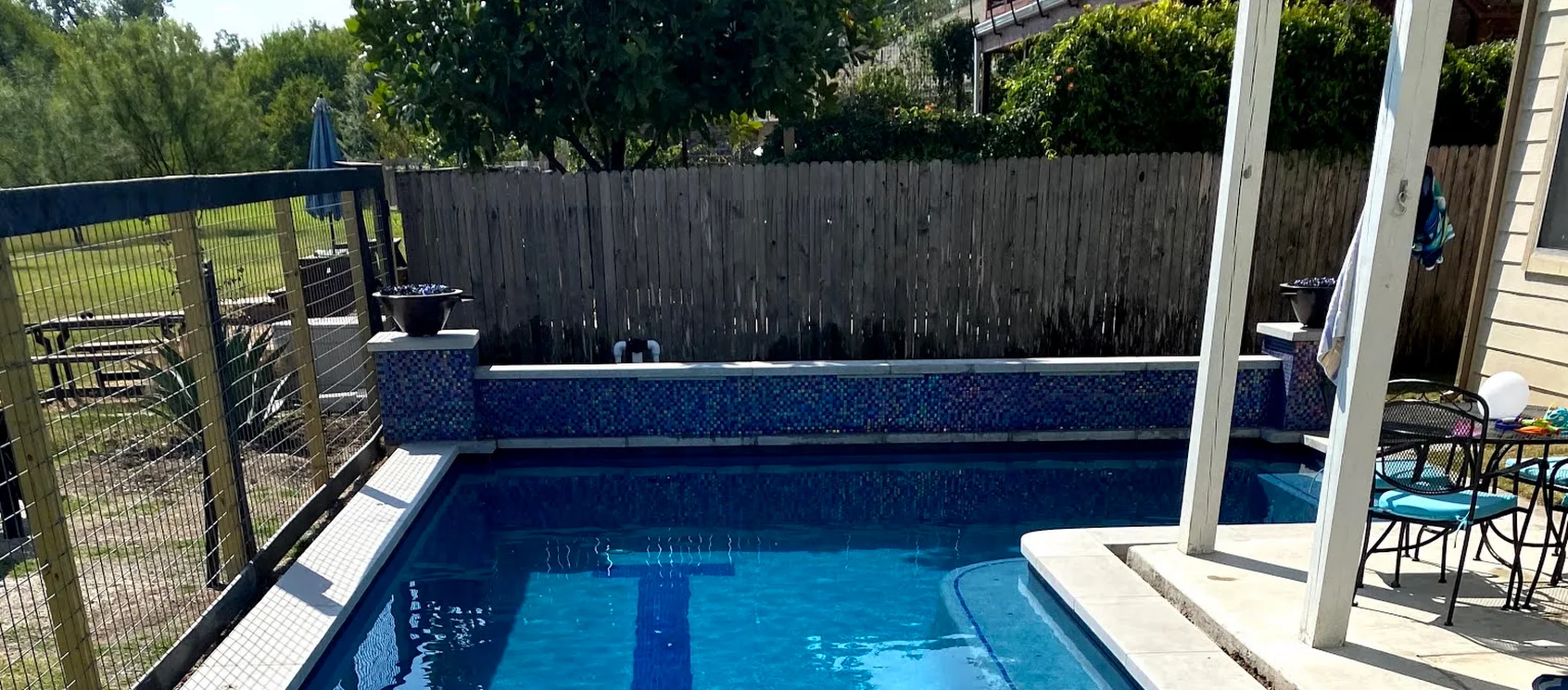
“Max helped me start up my pool after it had been built. He was extremely informative and knowledgeable. I was pretty overwhelmed before he stopped by with all of the equipment and processes... but after he left, I felt at ease with everything. He pointed out some issues with the plumbing, and I was able to get the plumbers back out to fix the issue. You can tell that Max takes pride in doing good work and desires the best for his customers.”

Steven Oliver
“We had an outstanding experience with Max...highly recommend him. We had him come out to give us an estimate on repairing some tile on our spa. Looked at what was going on and said he’d get back to us with the estimate (he did...the next day). However, what really stood out for us was him taking the time to look at our entire pool setup (equipment, pool app settings, schedules, chemicals, etc) and give us some suggestions on how to make everything work more efficiently for our setup. It’s really been great to work with someone who still focused on taking care of customers and building a relationship. Highly recommend Max to anyone needing help with their pool.”

William Mahrer
“Using Max Pools to rebuild my filter pump impellor and replace it’s locked up motor was a great experience. Max responded within minutes of my outreach to him, came to my residence within an hour or so, diagnosed the issues, quoted me the price in under an hour and by the next day the work was completed. Max was one of 8 pool companies I contacted, with most of them booked out a week or more.”

Nancy Keasler
“Max Pools Austin, LLC is 100% knowledgeable, efficient, communicative, and so very generous with their knowledge. Every person from their company is super polite, friendly, welcoming, and knows what they are doing. Our pool is in wonderful hands, and I never have to worry about it.”

Paul Green
“Max pools has always been super responsive to our pool equipment problems and this time was no exception. Max has the answers (and the parts) to fix the small leak and had us back in business right away. Timely, knowledgeable, friendly and reliable.”

Chris Kiszely
“I’ve used Max Pools for years (repairs and cleaning service) and Max and his team have always done a great job cleaning and repairing my pool equipment.”

LisaJustine Hernandez
“Max helped me re-locate my motor and filter many years ago. Happily his work continues to do it’s job. I’m a happy long-term customer.”

Gary Stanworth
“Max and his team do an excellent job keeping my pool clean and operating properly. They are also very quick to respond when I have a problem. They are the best.”

Lance Goldsmith
“Dominic is always punctual, thorough and a pleasure to deal with.”

Joey Pham
“100% trusted in pool business. Max and his crew did an amazing job, not just with servicing our pool, but with the care and pride they put into their work. A true happy client here.”
QUESTIONS
Frequently Asked Questions
Max Pools Austin provides weekly pool maintenance, repair, and boutique construction across the greater Austin, TX metro and the Texas Hill Country, including Austin, Westlake Hills, Bee Cave, Lakeway, Dripping Springs, Spicewood, Driftwood, Buda, and Round Rock. Because the client roster is kept intentionally small, Max personally services every route himself rather than dispatching a rotating crew across a wider territory. If your address is close to one of these communities but you are not sure whether it falls inside the current route, call or text and Max will tell you directly rather than leaving you guessing from a generic coverage map.
Weekly Pool Maintenance in Austin, TX: A Complete Guide
Weekly pool maintenance is the single biggest factor in whether a backyard pool stays an asset or turns into a recurring headache. Here is a closer look at what real maintenance involves, why Austin’s climate makes it non-negotiable, and what to actually expect from a standing weekly account.
Why Weekly Service Matters More Here Than in Milder Climates
Central Texas puts a pool through more than most parts of the country. Long stretches of triple-digit heat from June through September accelerate chlorine burn-off and algae growth to a degree that homeowners moving here from cooler regions are rarely prepared for. A pool that would coast for ten days on a lighter maintenance schedule somewhere else can turn cloudy, then green, in under a week once Austin summer heat really sets in.
That is the entire argument for weekly service instead of biweekly or as-needed visits. Chlorine demand does not hold steady through a Texas summer, it spikes with heat, direct sun exposure, and bather load, and a schedule built around a milder climate simply cannot keep pace. Weekly visits catch that swing before it becomes visible, which is a very different job than fixing a pool after it has already turned.
The same logic applies in reverse during the milder months. Austin winters are short and rarely severe, but they are not frost-free, and a handful of freeze events most years put un-winterized equipment at risk. A consistent weekly or scheduled equipment check through the cooler months is what catches a cracked pump housing or a vulnerable line before a cold snap turns it into an emergency repair call.
What a Real Weekly Maintenance Visit Actually Includes
Not every maintenance visit is the same, and the gap between a rushed five-minute stop and a proper service call is where most pool problems quietly start. A real weekly visit covers water testing and balancing across pH, chlorine, alkalinity, and calcium hardness, not just a quick chlorine check. It also includes full surface skimming, brushing the walls and floor to prevent algae from ever getting a foothold, and vacuuming when debris has settled rather than just floating.
Equipment does not maintain itself, either. Skimmer and pump baskets need clearing on every visit, not just when they are visibly full, since a partially clogged basket restricts flow and makes the whole filtration system work harder than it should. A proper visit also includes a visual inspection of the equipment pad itself: checking for a slow leak at a union fitting, a pump starting to run louder than normal, or a pressure reading drifting outside its normal range.
The part that separates a maintenance plan that actually protects a pool from one that just keeps the water clear on the surface is what happens when something looks slightly off. A properly run account flags a developing issue the same day it is noticed, not weeks later when it has already turned into a repair call. That single habit, catching small problems while they are still small, is worth more over a year than any single piece of equipment.
What Happens When Maintenance Gets Skipped or Cut Back
Skipping maintenance rarely fails all at once. It starts quietly: chlorine drifts a little low for a week, then a little lower the next, and by the time algae is visible to the naked eye, the underlying imbalance has usually been building for ten days to two weeks. Once a pool actually turns green, restoring it takes meaningfully more chemical, more labor, and more time than staying ahead of the same imbalance would have taken in the first place.
The equipment side is often the more expensive consequence, and the one homeowners notice less until it fails outright. Chemically imbalanced water is corrosive or scale-forming depending on which direction it drifts, and either extreme shortens the working life of pumps, heaters, and salt cells over time. A pool that looks fine to the eye can still be quietly wearing down thousands of dollars in equipment if the underlying chemistry has been off for months.
There is also a safety and liability angle that is easy to overlook. Pools that are inconsistently maintained are more prone to slippery algae growth on steps and shallow-end surfaces, and cloudy water makes it harder to see the pool floor, which matters directly for anyone swimming, especially children. Consistent maintenance is not just a cosmetic decision, it is part of keeping a backyard pool a safe place to actually use.
How the Hill Country Calendar Shapes a Maintenance Schedule
Austin’s maintenance calendar does not run on a single fixed routine year-round, even on a standing weekly plan. Spring brings a distinct pollen season that coats pool surfaces in a fine yellow film for several weeks, which increases filter demand well before the real summer heat has even arrived. Homeowners who assume spring is a quiet season for pool care are often surprised by how much filtration work pollen alone creates.
Summer is the demanding stretch, with peak sun exposure and bather load both pushing chlorine demand higher at the same time that evaporation is at its fastest. This is the period where a lapse of even a week or two most reliably shows up as visible algae, and where the value of a standing weekly account is most obvious.
Fall introduces its own debris load as trees across Central Texas begin shedding, and properties with mature oak canopy see a meaningfully heavier skimming and brushing demand through the season than a more open, newer-subdivision yard. Winter, by contrast, is about protecting equipment more than managing chemistry: pool use drops, but a badly timed freeze can still crack a pump housing or damage a heater that was not properly protected, which is why equipment checks continue even when the water itself needs less attention.
Modern Pool Equipment and What It Changes About Maintenance
Pools built or upgraded in the last several years increasingly run variable-speed pumps and salt chlorination as the default rather than the exception, and that shift changes what a maintenance visit actually looks for. A variable-speed pump runs quieter and more efficiently than older single-speed models, but when something does go wrong, the fix usually involves a specific control board or sensor rather than a simple mechanical part, which is part of why manufacturer-specific certification matters more than general handyman familiarity.
Salt systems replace manual chlorine dosing with a cell that generates chlorine from dissolved salt, which is lower-maintenance day to day but still needs its own attention: cells lose efficiency over time and eventually need cleaning or replacement, and a maintenance visit that only checks chlorine levels without also checking the cell itself is missing half the picture.
None of this removes the need for the basic weekly routine, water testing, skimming, brushing, and an equipment glance still apply regardless of how modern the system is. What changes is the depth of equipment knowledge required to catch a developing problem early, which is exactly why manufacturer certification across brands like Fluidra, Hayward, Jandy, Waterway, and Zodiac matters for a maintenance provider, not just for a repair technician.
What to Actually Look for in an Austin Pool Maintenance Company
The maintenance industry has a wide range of service quality hiding behind similar-sounding marketing, and the difference usually shows up in exactly the details described above: whether a visit is rushed or thorough, whether equipment gets a real inspection or a glance, and whether a small issue gets flagged immediately or discovered later. Asking a prospective maintenance company what a standard visit actually includes, specifically, is a better filter than asking about price alone.
Consistency of personnel matters more than most homeowners expect going in. A rotating cast of unfamiliar technicians means nobody builds real familiarity with a specific pool’s quirks, its equipment history, its particular chemistry tendencies. A smaller, boutique-style operation that keeps the same person on the same route account to account tends to catch developing issues faster simply because that person has a baseline to compare against.
Finally, no long-term contract should be required to trust a maintenance company. A provider confident in the value of consistent, correctly done weekly service should be comfortable earning that business one week at a time rather than locking a homeowner in. That structure also tends to correlate with a company that is not cutting corners to hit a quota of accounts serviced per day.
Weekly Pool Maintenance Across Austin and the Texas Hill Country
Max Pools Austin runs a weekly maintenance route across Austin, Westlake Hills, Bee Cave, Lakeway, Dripping Springs, Spicewood, Driftwood, Buda, and Round Rock, and the pools across that footprint vary enormously: decades-old plaster pools in established central Austin neighborhoods, newer builder-grade fiberglass and vinyl-liner pools in Buda and Round Rock’s growth corridors, hard well-water systems out toward Dripping Springs and Spicewood, and larger custom builds with spas and water features in Westlake Hills and Lakeway.
That range is exactly why a one-size-fits-all maintenance script does not work well across the Austin metro. An older central Austin pool with patched-together equipment gets read differently on a first visit than a five-year-old subdivision pool with a matched, still-under-warranty system. Servicing this wide a territory well means adjusting the approach pool by pool, not assuming every backyard needs the identical routine.
The client roster stays deliberately small on purpose, which is what makes that pool-by-pool attention possible in the first place. Owner Maxwell Conklin has worked in pools since he was eighteen, and Max Pools Austin was built on the idea that a smaller, boutique client list gets better, more consistent service than a high-volume operation ever could. For homeowners anywhere across this service area who are tired of inconsistent techs and reactive, as-needed visits, that is the entire pitch: the same person, showing up on the same schedule, actually paying attention.
One playbook does not fit every Austin pool
Austin carries the widest range of pool ages and pool types of any area on the route. Central neighborhoods hold plaster pools that are decades old, built long before today’s variable-speed pumps and salt systems existed, alongside newer backyard renovations that layered modern equipment on top of an old shell. Farther out toward the growth corridors, subdivisions from the last fifteen years carry gunite and fiberglass pools built to a more standardized spec. Servicing Austin means adjusting the approach pool by pool rather than assuming one playbook fits the whole city, and it means the crew has seen close to every equipment combination the metro has to offer.
Pool ownership across Austin
An older plaster pool in a central Austin neighborhood behaves differently than a five-year-old build in a suburban subdivision. Aging plaster etches and stains in ways that change chemical demand month to month, and older pools are more likely to be running equipment that has been patched and replaced piecemeal over the years rather than installed as a matched system. That history matters when diagnosing a repair, since a pump replaced in 2019 next to a filter from 2011 does not always talk to the same automation the way a fully matched system would.
Newer Austin builds tend to run tighter automation, energy-efficient variable-speed pumps, and salt chlorination as the default rather than the exception. These systems are generally lower-maintenance week to week, but when something does go wrong, the fix usually involves a specific board, sensor, or cell rather than a simple mechanical part. Recognizing which category a pool falls into on the first visit shapes both the maintenance plan and the repair approach from day one.
Central Austin also has more homes where a pool has changed hands with the property, sometimes more than once, and where the equipment history is not fully known by the current owner. Part of the first visit to any new client’s pool in Austin is building that history back up: reading serial numbers, checking install dates where visible, and noting anything that looks like a past patch job rather than a proper repair. That record becomes the baseline for every visit after it.
Backyard size and layout also vary more in Austin than in most newer suburbs, since older neighborhoods were platted before pools were a default expectation and additions were fit into whatever space was left. A pool wedged into a smaller central Austin lot sometimes has less room around the equipment pad than a standard subdivision setup, which is factored into how a visit is planned, especially for anything involving parts replacement rather than routine chemistry work.
Weather and water chemistry in an Austin summer
Austin summers run long and hot, often with stretches of consecutive 100-degree days from June through September. Heat accelerates chlorine burn-off and algae growth, which is why a pool that looked fine on a Monday visit can show early algae bloom by Thursday if a filter is starting to lose efficiency or a chlorinator is under-dosing. Weekly maintenance is set up around this reality: water testing and balancing, skimming and brushing, and filter checks every visit rather than a lighter seasonal schedule.
Central Austin’s municipal water supply is generally softer than the well water found farther out toward the Hill Country, which simplifies some of the scale-related maintenance work but does not remove the need for consistent chlorine and pH management through the hottest months. A pool that sits untouched for even a week or two in peak summer can go from clear to green fast, which is the core argument for a standing weekly plan rather than reactive, as-needed visits.
Winters in Austin are mild but not frost-free, and a handful of freeze events most years put older, un-winterized equipment at risk. Weekly visits taper as pool use drops through the colder months, but equipment checks continue, since a cracked pump housing from an unexpected February freeze is a far more expensive fix than a preventive check the week before a cold snap.
Spring in Austin brings its own chemistry challenge: pollen season coats pool surfaces in a fine yellow film for several weeks each year, which changes filter demand even before the real summer heat arrives. Accounting for that seasonal swing, rather than running the exact same routine year-round, is part of what keeps a pool from falling out of balance during the shoulder seasons.
Weekly maintenance in Austin
Weekly maintenance plans in Austin are priced depending on pool size and equipment, and cover water testing and balancing, skimming and brushing, filter checks, and equipment inspection on every visit. The goal on each stop is the same regardless of neighborhood: leave the water balanced and leave a clear record of anything that needs attention before it becomes a repair call. For older pools with more equipment quirks, that inspection step often catches small issues, a slow leak at a union, a pump starting to run loud, before they turn into an emergency.
Because Austin properties vary so much in age and layout, the first month of service on a new Austin account usually involves a bit more note-taking than a straightforward newer-subdivision pool elsewhere on the route. That upfront work pays off; once the pool’s quirks are documented, every following visit runs faster and catches problems sooner.
Austin’s density also means a maintenance route through the city touches more neighborhoods in a single day than a similar route through a spread-out Hill Country town, which keeps the weekly schedule efficient without cutting the actual time spent at each pool. Every stop still gets the same full routine regardless of how tight the day’s route is.
Repairs across Austin’s pool inventory
Repair work in Austin spans the full range from decades-old plaster pools running mismatched equipment to newer builds with variable-speed pumps and salt systems still under warranty. Most repair calls get an on-site inspection the same day or the next business day, and the crew is certified on Fluidra, Hayward, Jandy, Waterway, and Zodiac equipment, which covers the large majority of what shows up across Austin’s pool stock regardless of the home’s age. Leak detection, pump and filter repair, tile and plaster work, and equipment diagnosis are handled with the same diagnosis-first approach: identify the actual failure point before recommending a fix, rather than defaulting to a full equipment swap.
On older Austin pools, a repair call sometimes turns up more than one issue at once, since equipment that has never been serviced together tends to fail out of sync. In that situation the inspection covers the full system rather than just the reported symptom, and any additional findings get flagged clearly before work starts, not added as a surprise on the invoice.
Construction for existing Austin clients
New pool construction is offered only to existing maintenance clients across the Austin service area. It is referral-based and one project runs at a time, so a build gets direct oversight from Max rather than being one of several jobs a crew is juggling simultaneously. This is not a high-volume build operation; it is a smaller, second offering for homeowners who are already on the weekly maintenance route and trust the relationship enough to bring a bigger project into it.
For an Austin homeowner on a central, older lot considering a renovation rather than a full new build, the same one-project-at-a-time approach applies. Renovations on established Austin pools sometimes involve more unknowns than a clean-slate new build, whatever the original construction and past repairs left behind, and the referral-only structure means that discovery process happens with the same person who already knows the pool from weekly service, not a crew starting from zero.
What the first visit to an Austin pool looks like
A new Austin account starts with a full walk of the equipment pad before any chemistry work begins: pump model and age, filter type and last-known service, chlorination method, and any visible patch jobs from past repairs. That baseline gets written down so every following visit is measured against what is actually installed rather than a guess based on the home’s age or neighborhood.
The first test also checks for anything a homeowner may not have flagged directly, a slow leak at a union fitting, a pressure gauge reading outside normal range, or a salt cell nearing the end of its service life. None of that changes the quoted monthly rate, but it does mean the first visit sometimes runs longer than a standard weekly stop while that record gets built. After that, the routine settles into the standard weekly check: water testing and balancing, skimming and brushing, filter checks, and an equipment glance, with the account’s specific history already on file.
Get in touch
Across Austin’s full mix of decades-old plaster pools and newer subdivision builds, the constant is who shows up: Max personally, on every route, whether that is the first walk of an unfamiliar equipment pad or the final check on a repair. There is no dispatcher assigning your pool to whoever is nearest and no rotating crew relearning its history each visit.
If an Austin pool needs weekly attention, a repair diagnosis, or you are already a maintenance client thinking about a future build, reach out to talk through the pool and the schedule. Same-day or next-business-day inspection is standard for repair calls, and new accounts are added as the route allows, no long-term contract required to start.

GET STARTED
Work With a Pool Company That Actually Shows Up
Max Pools Austin is currently accepting new maintenance clients in the Greater Austin area. Spots are limited on purpose.
4.6(31)Talk to Max
We treat our customers like they are our own, with our mom-and-pop shop. When you reach out, you are talking directly to MAXWELL CONKLIN and his team. We make every effort to respond the same day.
Check your zip code
Do we service your area?

You will hear back from MAXWELL CONKLIN directly.